
May 20, 2023
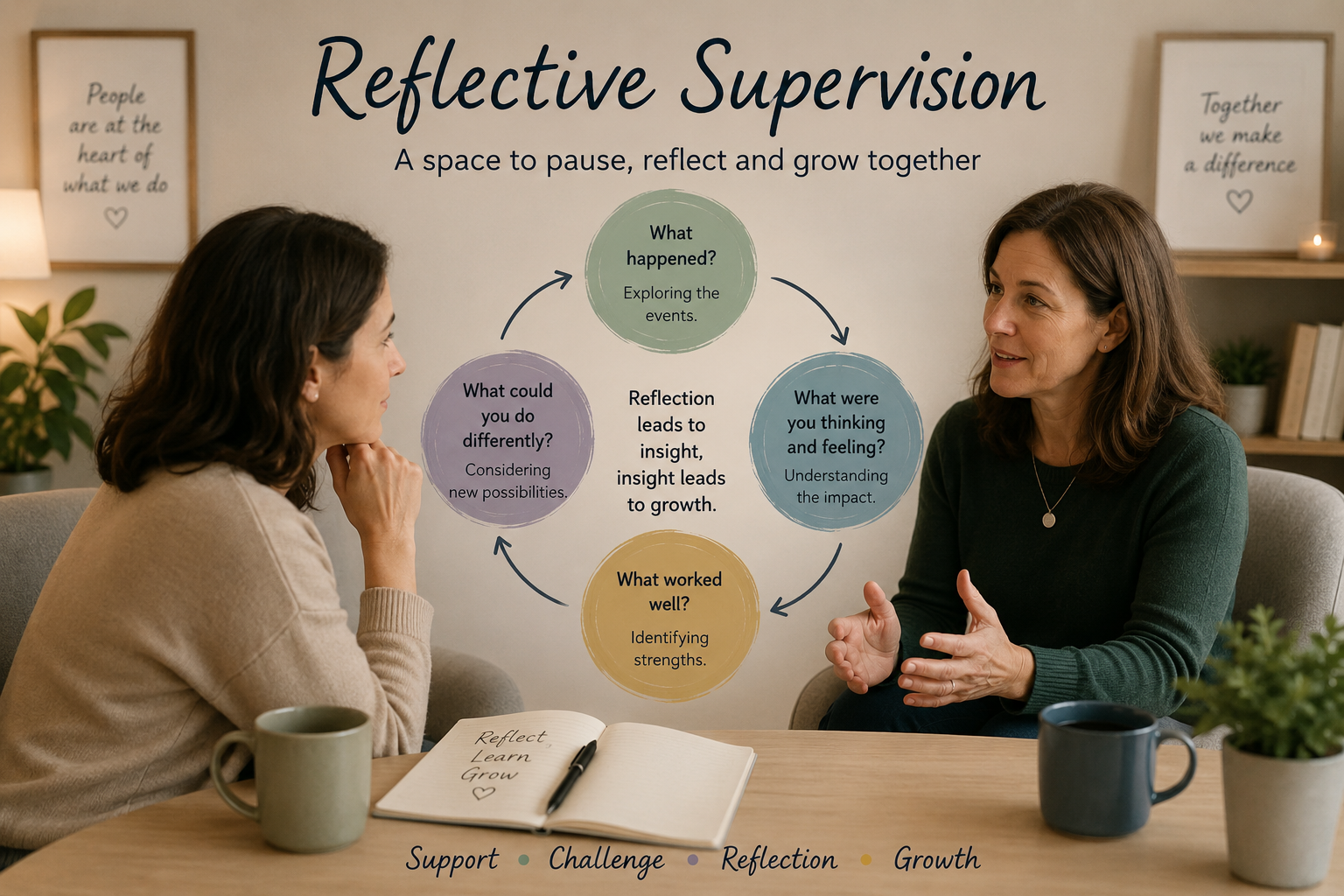
Reflective supervision isn’t an added task on your to-do list, it’s the practice that keeps your work meaningful, ethical, and sustainable. For mental health consultants, clinicians, and team leaders, reflective supervision provides a structured space to pause, think, and grow. It helps you make better decisions, manage stress, and deepen client care. This post explains why reflective supervision matters, what it looks like in practice, and simple ways to bring it into your daily work.
Why reflective supervision matters
• Protects clients and clinicians: Reflection reduces blind spots and blind reactions that can harm clients or lead to boundary drift.
• Builds clinical judgement: Regular reflective conversations develop your capacity to notice patterns, weigh options, and adapt interventions to each client’s context.
• Reduces burnout: Naming feelings, frustrations, and ethical tensions in supervision releases emotional load and prevents cumulative stress.
• Strengthens team cohesion: When teams reflect together, trust increases, mistakes become learning opportunities, and shared approaches emerge.
• Encourages ethical practice: Reflection surfaces values, assumptions, and power dynamics so you can act with clarity and integrity.
What reflective supervision looks like
• Not just case review: While case details are discussed, the focus is on the clinician’s thoughts, emotions, and responses to the work.
• Curious rather than corrective: Supervisors ask open questions (what did you notice? what surprised you?) instead of simply giving directives.
• Attends to multiple domains: Clinical reasoning, relational dynamics, personal reactions, cultural context, and organizational constraints all have space.
• Regular and predictable: It’s most powerful when scheduled and consistent — brief weekly check-ins beat sporadic long sessions.
• Confidential and contained: Supervision needs clear boundaries so clinicians can be candid without fear of judgment or administrative penalty.
Simple reflective supervision techniques you can use tomorrow
• The 3Qs (Quick start): Ask: What went well? What was challenging? What’s one question you have? Use this at team huddles or after sessions.
• The “What were you thinking/feeling?” split: Encourage clinicians to separate cognitive hypotheses from emotional reactions to make decisions clearer.
• Reflective journaling: Ask supervisees to bring a one-page reflection on a case: description, feelings, dilemmas, and learning goals.
• Role reversal: Supervisor and clinician swap roles briefly to explore different perspectives (helps reveal assumptions).
• Scalings and maps: Use a 0–10 scale for confidence or distress; draw genograms or ecological maps to surface context and relations.
• Minute-to-minute check-ins: Start supervision sessions with a 60-second body/feeling check to anchor presence and safety.
How to build a reflective supervision culture in your service
• Model vulnerability: Supervisors who name their own uncertainties normalize reflection across the team.
• Protect time and signals: Make reflection non-negotiable by scheduling and giving time priority over urgent but less important tasks.
• Train supervisors: Reflective supervision is a skill—invest in training focused on inquiry, containment, and relational noticing.
• Mix formats: Combine individual supervision with group reflective practice and peer supervision for breadth and efficiency.
• Measure what matters: Track wellbeing indicators, staff retention, and perceived clinical confidence to show impact.
• Make it practical: Tie reflection to action plans and learning goals so insights translate into better care.
Common barriers and quick responses
• “We’re too busy.” Try micro-supervision: 10–15 minutes focused reflection after challenging sessions. It costs little time and resets practice.
• “Supervisors lack skills.” Offer short coaching workshops and peer observation so supervisors learn by doing.
• “Staff fear judgment.” Create explicit agreements about confidentiality and focus on curiosity, not evaluation.
• “Leadership won’t fund it.” Present small pilots with measurable outcomes (reduced sick leave, improved client feedback) to build the case.